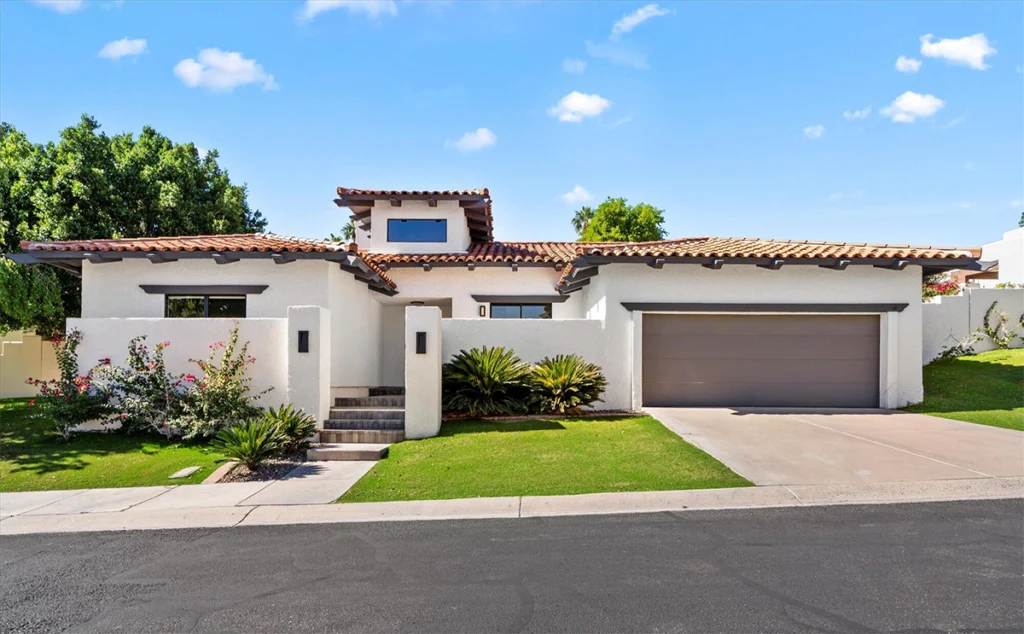

Frank Lloyd Wright’s Legacy in the Biltmore District
Frank Lloyd Wright is widely regarded as the greatest American architect of the 20th century. That is not just a line for history books—it shows up in how the Biltmore district looks, feels, and functions today.
His philosophy of organic architecture—designing buildings in harmony with their environment—shaped everything from Midwestern Prairie homes to experimental desert compounds. In Phoenix, and particularly in the Biltmore area, that philosophy set the tone for what “desert luxury” would become.
This page explores how Wright’s ideas traveled from Wisconsin to the Sonoran Desert, how they intersected with the Arizona Biltmore, and how his legacy still influences Biltmore living—and homebuying—today.
Ready to explore Biltmore properties?
From Prairie Horizons to the Desert Edge
Before Arizona entered the picture, Wright had already broken from European traditions and defined a distinctly American approach to architecture.
Prairie Style and Organic Architecture
In the early 1900s, Wright’s Prairie Style homes introduced a new language of design:
These elements were not cosmetic. They came from his core belief in organic architecture: buildings should grow naturally from their surroundings, respecting both the site and the people who live there.
Human Experience as a Design Tool
Wright was also obsessed with how people move through space. One of his signature techniques—compression and release—intentionally led people through low, intimate areas into larger, dramatic spaces. The architecture choreographed the experience.
That combination of environmental sensitivity and human-centered design set the stage for what he would later do in the desert.
Wright Arrives in Arizona and Encounters the Biltmore
Wright’s first direct link to Phoenix came in 1928, when he arrived as a design consultant for the Arizona Biltmore Hotel. The primary architect was Albert Chase McArthur, a former Wright apprentice, but Wright’s influence on the overall design language and “textile block” construction system is well-documented.
For Wright, the trip did more than add a line to his résumé. It changed his trajectory.
The Desert as Teacher
Standing in the Sonoran Desert, Wright encountered a landscape that demanded a different response:
Where the prairie suggested open horizontals and sheltering roofs, the desert demanded filtered light, deep shade, and materials that looked like they emerged from the ground itself. Wright recognized that if organic architecture meant anything, Arizona would require its own answer.
Taliesin West: The “Desert Laboratory”
In 1937, Wright bought a large tract of raw desert at the base of the McDowell Mountains in what is now Scottsdale. There, he began building Taliesin West, his winter home, office, and studio.
He called it his “desert laboratory”—a place to test what organic architecture meant in this new environment.
Built from the Desert, Not Just in It
At Taliesin West, the construction approach was radically local:
The idea was clear: Taliesin West should feel like it grew out of the desert floor.
Light, Shade, and Climate
The desert’s extreme light forced new solutions:
- Canvas roofs to filter intense sun while maintaining a connection to sky and air
- Generous overhangs, covered walkways, and transitional outdoor rooms
- Open-air courts and terraces that made outdoor living a core part of daily life
These moves were not stylistic experimentation—they were early, serious responses to what we now call climate-responsive design.
The Taliesin Fellowship
Taliesin West also housed the Taliesin Fellowship, an apprenticeship program where students lived, worked, and learned on site. Apprentices participated in design, construction, and maintenance, embedding Wright’s philosophy into their daily lives.
That model of immersive, hands-on training still influences architectural education and practice worldwide.
Wright’s Broader Arizona Footprint
Beyond Taliesin West and his consulting work at the Arizona Biltmore, Wright’s Arizona legacy includes major civic and cultural projects.
ASU Gammage Auditorium
One of his last completed designs, ASU Gammage Auditorium in Tempe, is a bold, circular performance hall with sweeping ramps and strong geometric forms. It demonstrates the same priorities visible in his residential work:
The Unbuilt “Oasis” Capitol and Its Spire
Wright proposed an ambitious design for a new Arizona State Capitol, titled “Oasis.” It envisioned a shaded, water-cooled civic complex tailored to the desert climate. The project was never built, but in 2004, a spire derived from that design was installed in Scottsdale as a public landmark—evidence that even Wright’s unbuilt ideas continue to shape Arizona’s visual identity.
A Global Legacy with Local Impact
Over his 70-year career, Wright designed more than 1,100 structures, with over 500 built. His work ranges across:
Signature works such as Fallingwater in Pennsylvania (a home built over a waterfall) and the Solomon R. Guggenheim Museum in New York City (with its iconic spiral ramp) reinforced his reputation as both a radical innovator and a deeply practical designer.
In 2019, eight of his buildings—including Taliesin (Wisconsin) and Taliesin West (Arizona)—were collectively inscribed as a UNESCO World Heritage Site, underscoring the global importance of his work.
Wright’s legacy also lives on through:
How Wright’s Vision Shows Up in the Biltmore Today
For the Biltmore district, Wright’s influence is not theoretical. It is visible in the area’s overall architectural character and in the expectations buyers bring to the market.
Design Principles You See Every Day
Walk or drive through the Biltmore and you will see echoes of Wright’s philosophy everywhere:
- Horizontal emphasis: long, low rooflines and massing that align with the desert horizon
- Deep overhangs and shaded outdoor rooms: practical responses to sun and heat that also create elegant profiles
- Textured materials: stone, block, and stucco treatments that pick up desert tones rather than fight them
- Indoor–outdoor flow: sliding walls, courtyards, terraces, and view corridors that make outdoor living a default, not a luxury
The best Biltmore homes and buildings follow the same rule he applied at Taliesin West: the desert is not a problem to be solved; it is the starting point for the design.
Biltmore Case Studies: Where Wright’s Legacy Lives
Several Biltmore neighborhoods and homes directly embody Wrightian principles. Look for these features in areas like:
- Arizona Biltmore Estates: Homes here often feature strong horizontal lines, desert masonry, and seamless indoor-outdoor integration.
- Coral Gables: Mid-century modern designs that prioritize open floor plans and connection to landscaped gardens.
- The Enclave at Biltmore: Custom estates with deep overhangs, shaded loggias, and organic material palettes.
Many of these properties were designed by architects who trained under Wright or were deeply influenced by his desert modernism.
Architecture as Lifestyle
Wright believed architecture should shape how people live, not merely provide a container for their furniture. In the Biltmore district, that is reflected in:
For residents, that means the architectural legacy is not just visual—it affects daily routines, social life, and how people experience the seasons.
Experience Wright’s Arizona
For anyone living in or considering the Biltmore, it is worth experiencing Wright’s Arizona legacy directly. Use the map below to plan your visits:
These sites, combined with the Arizona Biltmore and the surrounding neighborhoods, give a full picture of how one architect’s ideas helped define what sophisticated desert living looks like.
Own a Piece of Architectural History
The principles Frank Lloyd Wright pioneered aren’t just for museums—they’re built into the very fabric of the Biltmore. If you’re drawn to homes that blend art, environment, and lifestyle, you belong here.
🔍 Explore Wright-Inspired Biltmore Homes
Search our curated collection of listings that embody desert modernism, organic architecture, and timeless design.
👉 View Available Properties on ArizonaBiltmoreRealty.com
📥 Download Our Free Guide: “Frank Lloyd Wright’s Design Principles: A Biltmore Homebuyer’s Checklist”
Use this checklist to evaluate homes, identify authentic Wrightian features, and make an informed investment in architectural legacy.
👉 Download the Free Guide
🏡 Schedule a Private Architectural Tour of Biltmore
Let our team guide you through the neighborhoods where Wright’s legacy lives. See the details, hear the stories, and find the home that moves you.
👉 Book a Consultation on TheTibiGroup.com
Need Local Guidance? Let the Phil Tibi Group Help
The Phil Tibi Group
Your Biltmore Real Estate Authority
Backed by decades of local expertise, deep neighborhood knowledge, and a proven track record, the Phil Tibi Group helps buyers navigate the estate market with clarity and confidence.
Schedule a Private Consultation →