
History of the Biltmore Area in Phoenix, Arizona
A Century of Innovation, Architecture, and Desert Luxury
The Biltmore area is one of Phoenix’s most storied and influential communities — a place where bold architectural experimentation, luxury hospitality, and desert living converge. Nearly 100 years after its inception, the Biltmore remains a cornerstone of Phoenix’s identity and a testament to a vision that transformed a remote desert landscape into an internationally recognized destination.
This page explores the rich history, major milestones, and lasting impact of the Biltmore area from its earliest days to the present.
More than a neighborhood, the Biltmore is a living legacy—a century-old vision of luxury, architecture, and sophisticated desert living carved from the Sonoran landscape. This is the story of how a bold dream transformed a remote stretch of Arizona desert into one of the most prestigious and enduring addresses in the Southwest.
The Vision: A Cathedral in the Desert (1920s)
In the 1920s, Phoenix was a quiet agricultural town. But where others saw barren land, Chicago brothers Warren and Charles McArthur saw a canvas for an unprecedented dream: a world-class resort destination that would rival the best in the world.
To bring this vision to life, they turned to their brother, Albert Chase McArthur, an architect who had trained under the legendary Frank Lloyd Wright. Albert didn’t just build on the desert; he built of it. His revolutionary design featured “Biltmore Blocks,” pre-cast concrete blocks textured to mimic the bark of a palm tree and colored to blend with the desert sand.
When the Arizona Biltmore Resort opened on February 23, 1929, it was an instant sensation—not merely a hotel, but a architectural declaration. It announced a new aesthetic for Phoenix: one of geometric harmony, organic materials, and a profound respect for the natural environment.
The Glamour: Hollywood’s Desert Playground (1930s-1950s)
The resort’s timing coincided with the Great Depression, but its fate was secured when chewing-gum magnate William Wrigley Jr., an early investor, purchased the property outright. Under his stewardship, the Biltmore became a sun-drenched magnet for America’s elite.
The guest list became the stuff of legend:
- Marilyn Monroe lounged by the Catalina Pool.
- Frank Sinatra and the Rat Pack brought their signature cool.
- Presidents from Hoover to Reagan sought its secluded luxury.
In 1931, Wrigley cemented his legacy by building the Wrigley Mansion on a nearby hilltop—a stunning estate offering panoramic views. Together, the resort and the mansion forged the area’s dual identity: a retreat for the world’s most famous faces and a refined community for visionary leaders.
The Architecture: A Blueprint for Desert Living
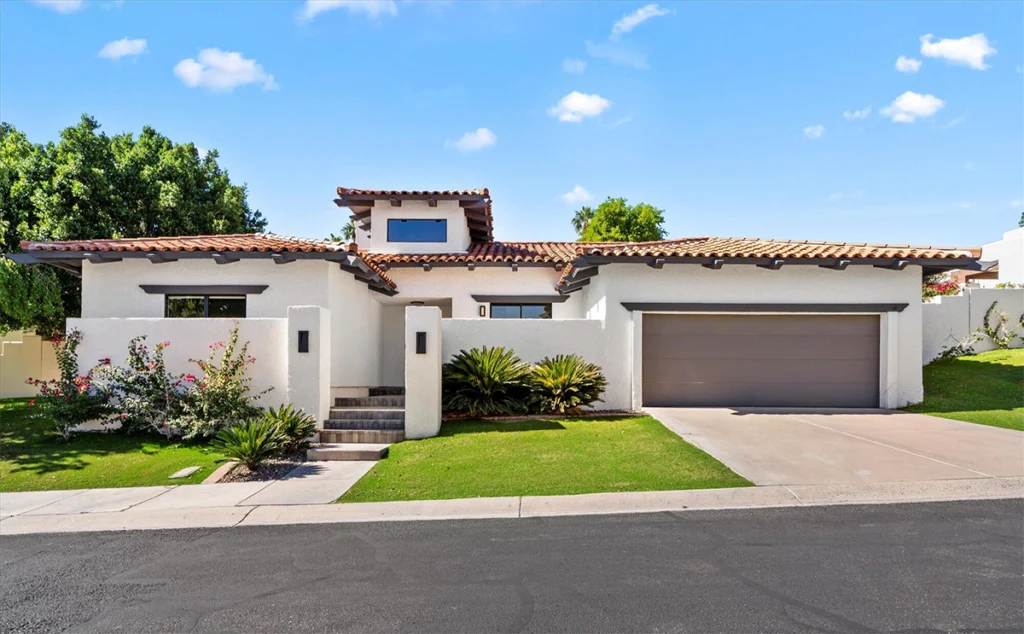
The genius of the Biltmore’s design didn’t stop at the resort’s walls. Its architectural language became the DNA for the entire surrounding community. The distinctive blocks, low-slung horizontal lines, and seamless flow between indoor and outdoor spaces inspired a generation of architects and builders.
This “Biltmore Style” was defined by:
- Deep overhangs and shaded walkways that mastered the Phoenix climate.
- Natural materials like local stone, concrete, and wood.
- Vista-driven designs that framed views of Camelback Mountain and golf course fairways.
This cohesive aesthetic gave the neighborhood a unique and timeless identity, making it a living catalog of 20th-century desert modernism.
The Resilience: Fire, Reinvention, and Rise (1970s-Present)
A devastating fire in 1973 tested the community’s mettle. Rather than discard its history, the Biltmore was meticulously rebuilt, preserving Albert McArthur’s original vision while integrating modern comforts. This commitment to honoring the past while embracing the future became a hallmark of the area.
The subsequent decades saw unprecedented growth, solidifying its status as Phoenix’s premier corridor:
- Biltmore Fashion Park emerged as a luxury retail landmark.
- Master-planned residential communities and soaring condominiums like The Esplanade redefined urban desert living.
- A recent $150 million restoration of the Arizona Biltmore resort ensures its legacy will inspire for another century.
The Biltmore Today: A Legacy Refined
Today, the Biltmore is more than a historic district; it is the thriving, beating heart of sophisticated Phoenix. It’s a place where the echoes of Frank Sinatra’s laughter blend with the clinking of glasses at a modern craft cocktail bar. Residents and visitors enjoy a unparalleled lifestyle:
- Strolling through the lush, walkable streets.
- Dining at award-winning restaurants.
- Shopping at iconic, designer boutiques.
- Living in architecturally significant homes.
It remains a powerful testament to the original vision—a perfect synthesis of history and modernity, all set against the breathtaking backdrop of the Arizona desert.
Ready to Begin? Let’s Talk.
Buying in the Biltmore requires insight, timing, and a deep understanding of Phoenix’s most prestigious neighborhood. We’re here to guide you at every step.
Call: (602) 320-1000
Email: Phil@thetibigroup.com
Visit: 4040 E Camelback Rd, Ste 130, Phoenix, AZ 85018
Get tailored recommendations, market analysis, and expert insights.